

.jpg)
The 12 Jyotirlingas are among the most revered shrines dedicated to Lord Shiva, spread across the sacred land of India. The word Jyotirlinga means “pillar of divine light,” symbolizing Shiva as the infinite, formless source of all creation.
Each Jyotirlinga represents a unique aspect of Shiva’s presence—his power, compassion, and transcendence. According to ancient scriptures, these sacred sites manifested where Lord Shiva appeared as a radiant column of light, blessing devotees with spiritual awakening and liberation.
Visiting all 12 Jyotirlingas is considered a deeply transformative pilgrimage. It is not just a physical journey across powerful spiritual destinations, but an inner journey—from ignorance to awareness, from limitation to expansion, from self to the divine.
This sacred yatra offers seekers the opportunity to:
-
Experience the profound energy of Shiva in different forms
-
Cleanse past karmas and elevate consciousness
-
Deepen meditation and inner stillness
-
Connect with ancient traditions and timeless wisdom
Embarking on the 12 Jyotirlinga journey is a call to awaken the divine within and walk the path of truth, devotion, and self-realization.
What
are the 51 Shakthi Peeths?
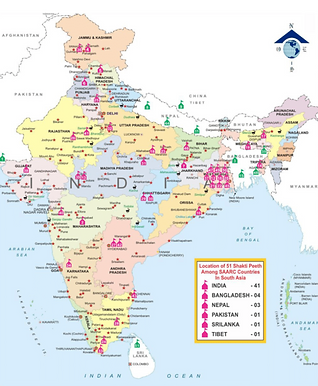
-
Kamakhya (Assam, India) – The yoni (womb) of Sati fell here; a powerful center of feminine creation energy.
-
Kalighat (Kolkata, India) – The toes of Sati fell here; one of the most revered Shakti temples.
-
Tarapith (West Bengal, India) – The third eye of Sati is believed to have fallen here; a center of tantric worship.
-
Kankalitala (West Bengal, India) – The skeleton (kankal) of Sati fell here; symbol of transformation.
-
Attahas (West Bengal, India) – Sati’s lower lip fell here; represents divine laughter and joy.
-
Nandikeshwari (West Bengal, India) – The necklace of Sati fell here; sacred to devotion and surrender.
-
Bahula (West Bengal, India) – Sati’s left arm fell here; associated with nurturing strength.
-
Bakreshwar (West Bengal, India) – The forehead of Sati fell here; known for healing hot springs.
-
Nalhateswari (West Bengal, India) – The throat of Sati fell here; represents expression and truth.
-
Fullara (West Bengal, India) – The lips of Sati fell here; symbol of divine speech.
-
Jwalamukhi (Himachal Pradesh, India) – The tongue of Sati fell here; eternal flames represent her presence.
-
Chintpurni (Himachal Pradesh, India) – The feet of Sati fell here; grants freedom from worries.
-
Naina Devi (Himachal Pradesh, India) – The eyes of Sati fell here; represents divine vision.
-
Chamunda Devi (Himachal Pradesh, India) – Sati’s hair fell here; a fierce protective form of Shakti.
-
Manasa Devi (Uttarakhand, India) – The head of Sati is believed here; fulfills devotees’ wishes.
-
Vaishno Devi (Jammu & Kashmir, India) – A manifestation of Shakti’s combined powers; a major pilgrimage site.
-
Jalandhar Peeth (Punjab, India) – Sati’s left breast fell here; symbolizes nourishment and compassion.
-
Kurukshetra (Haryana, India) – The ankle of Sati fell here; connected with dharma and righteousness.
-
Vishalakshi (Varanasi, India) – The earrings of Sati fell here; linked with wisdom and grace.
-
Vindhyavasini (Uttar Pradesh, India) – Sati’s back fell here; powerful seat of divine strength.
-
Maihar (Madhya Pradesh, India) – The necklace of Sati fell here; symbolizes devotion.
-
Ujjaini (Madhya Pradesh, India) – The elbow of Sati fell here; associated with spiritual power.
-
Harsiddhi (Madhya Pradesh, India) – The upper lip of Sati fell here; a place of fulfillment.
-
Amba Ji (Gujarat, India) – The heart of Sati fell here; center of love and devotion.
-
Pavagadh (Gujarat, India) – The toe of Sati fell here; sacred hill temple.
-
Hinglaj (Balochistan, Pakistan) – The head of Sati fell here; one of the oldest Shakti Peethas.
-
Karavira (Kolhapur, India) – The eyes of Sati fell here; known as Mahalakshmi temple.
-
Tulja Bhavani (Maharashtra, India) – The right arm of Sati fell here; revered by warriors.
-
Saptashrungi (Maharashtra, India) – The right hand of Sati fell here; associated with protection.
-
Mahur (Maharashtra, India) – The left breast of Sati fell here; symbol of motherly care.
-
Draksharamam (Andhra Pradesh, India) – The cheek of Sati fell here; sacred Shiva-Shakti temple.
-
Srisailam (Andhra Pradesh, India) – The neck of Sati fell here; powerful Jyotirlinga and Shakti site.
-
Kanchipuram (Tamil Nadu, India) – The navel of Sati fell here; represents creation energy.
-
Madurai (Tamil Nadu, India) – The shoulders of Sati fell here; linked to Meenakshi Devi.
-
Kanyakumari (Tamil Nadu, India) – The back of Sati fell here; meeting point of three oceans.
-
Sringeri (Karnataka, India) – The tongue of Sati fell here; center of knowledge and wisdom.
-
Mookambika (Karnataka, India) – The throat of Sati fell here; balances creation and destruction.
-
Chamundeshwari (Mysore, India) – The hair of Sati fell here; fierce protector goddess.
-
Attukal (Kerala, India) – The head of Sati fell here; known for the largest women’s gathering.
-
Chottanikkara (Kerala, India) – The face of Sati fell here; healing and mental peace.
-
Kireet (West Bengal, India) – The crown of Sati fell here; symbolizes divine sovereignty.
-
Ratnavali (West Bengal, India) – The right shoulder of Sati fell here; represents strength.
-
Yogadya (West Bengal, India) – The great toe of Sati fell here; associated with grounding energy.
-
Bhairavi (Tripura, India) – The right leg of Sati fell here; signifies movement and action.
-
Tripura Sundari (Tripura, India) – The right foot of Sati fell here; symbol of beauty and grace.
-
Umananda (Assam, India) – The left shoulder of Sati fell here; island temple in Brahmaputra.
-
Jayanti (Meghalaya, India) – The left thigh of Sati fell here; hidden forest shrine.
-
Guhyeshwari (Kathmandu, Nepal) – The hips of Sati fell here; sacred tantric center.
-
Janakpur (Nepal) – The nose of Sati fell here; associated with divine beauty.
-
Mithila (Bihar/Nepal region) – The left arm of Sati fell here; connected to Sita’s land.
-
Lanka (Sri Lanka) – The anklet of Sati fell here; linked with ancient Ramayana lore.
Trip Facts

Duration
3 Months

Group Size
1-25 Pax

Pricing
Donation Based

Meals
Full board

Accommodation
Hotels or Ashrams

Transportation
Train & Bus
Since this trip is a long journey spanning about a month and several miles across different indian states, there will be multiple options for travel, accommodations, and food which you may choose to your liking:
Option 1:
You come along with us throughout the journey to all 51 Shakthi Peethas. We will arrange food, accommodations, and travel for you. Just relax and enjoy the ride.
Price: $10,000 USD (approx., contact us for exact pricing)
Option 2:
You arrange all your travel, food, and accommodations yourself. You will be joining us only for the visit to the Shakthi Peethas, guided meditation sessions, and pranayama sessions.
Price: This option is donation-based and has no base cost.
Option 3:
You may choose to join us at specific Shakthi Peethas, as per your choice. You will be joining us only for the visit to the specified Shakthi Peethas, guided meditation sessions, pranayama sessions, and fire ceremonies, which will include food at your specified Shakthi Peethas. All travel, accommodation, and food will need to be arranged yourself.
Price: This option is donation-based and has no base cost.

Pranayama (Breathwork) Practice:
Each day begins with guided breathwork to awaken your energy, regulate your nervous system, and support inner stillness. Learn powerful Pranayama techniques to enhance focus, vitality, and adaptability to altitude.
Meditation for Inner Peace:
Delve into silent and guided meditations that help quiet the mind and open the heart. You’ll explore techniques rooted in mindfulness, self-inquiry, and mantra to deepen your spiritual presence.
Daily Yoga – Shiva Kriya:
Strengthen your body and align your inner energies through Shiva Kriya. This unique practice cultivates balance, grounding, and heightened awareness — preparing you for each sacred experience.
Sacred Fire Ceremonies & Sound Healing:
Participate in traditional fire rituals (Agni Homa) by the river and experience group sound healing sessions led by Yogi Mahesh Chaitanyashree. These sacred offerings uplift the spirit and attune you to the deeper rhythms of life.
Satsang & Spiritual Dialogue:
Join heartfelt conversations and spiritual Q&A with Yogi Bishwanath. These daily satsangs offer space for clarity, inner breakthrough, and direct transmission from a Self-Realized master.